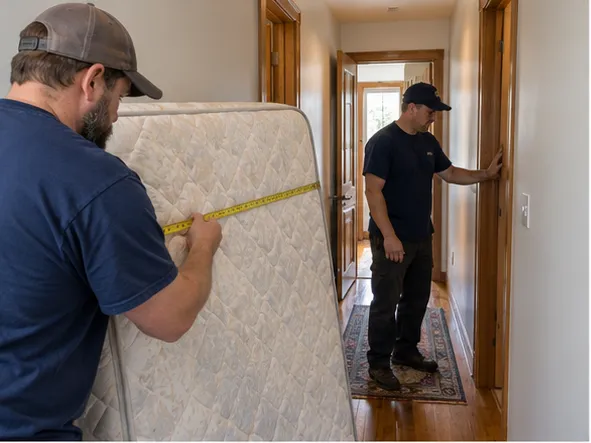
Measure the mattress and the tightest part of the route before pickup day. The narrowest doorway, stair turn or hall corner usually decides whether the mattress can leave flat, on edge or with a controlled flex.
Start with the carry path
Walk from the bedroom to the likely loading point. Remove small furniture, lamps, rugs and cords that could catch a foot. Open doors fully and make sure pets and children have a separate space while the item is moving.
Measure the mattress width, length and depth. Then check the bedroom door, hallway width, stair landing and exterior door. A foam mattress may flex, while an innerspring or hybrid model can be less forgiving. Do not cut, fold or dismantle a mattress to force it through a route.
Pickup-day checklist
- Strip sheets, protectors and loose bedding.
- Photograph the item and tight access points for the estimate.
- Clear the full path, including the exterior landing.
- Tell the provider about stairs, elevators and parking limits.
- Keep the mattress dry before collection.
Describe the condition plainly
Water damage, strong odors, pests or contamination can change what a provider can accept and where the mattress may go. Share those details before a crew arrives. A photo helps, but it does not replace a direct condition description.
If the mattress is paired with a box spring, foundation or frame, list each piece. That gives the provider a better picture of the load and the time needed inside the room.
Questions to ask before pickup
Ask whether the quote includes the indoor carry, stairs, loading and transport. Confirm whether you need to wrap the item and what happens if the measured route is too tight. If recycling matters to you, ask whether a currently accepting facility is available for this mattress type and condition.
Use the mattress removal guide to review scope and estimate factors, then email your measurements and item list.