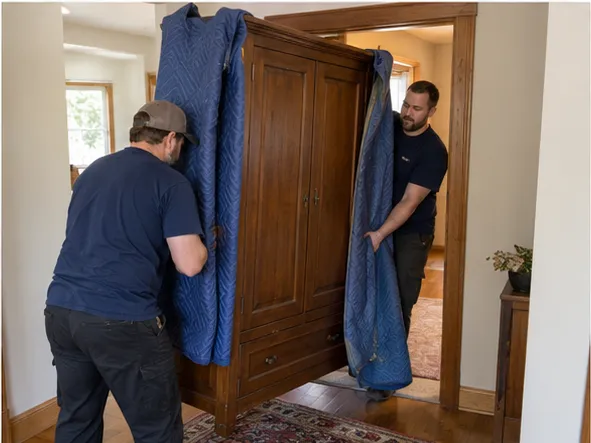
Start with an inventory, not a moving day pile. Bedroom furniture varies in weight, construction and risk. A tall wardrobe, a dresser with a mirror and two small nightstands need different handling plans.
List each piece on its own line
Record the item type, approximate dimensions and floor level. Note loose drawers, glass, mirrors, stone tops or attached shelves. If a piece separates into sections, say whether that separation has been confirmed.
Room inventory fields
- Item name and count
- Width, height and depth
- Material and fragile components
- Current room and floor
- Door, stair and loading constraints
Empty contents before the carry
Remove clothing, books and loose personal items. Empty drawers reduce shifting and make it easier to assess the furniture itself. Ask the provider whether drawers should stay in the piece or be removed for the route.
Do not tape directly onto finished wood. If protection is needed, discuss blankets, wrap and corner protection before pickup.
Separate decisions from lifting
Decide what stays before the crew arrives. Marking the removal pieces avoids confusion when similar furniture remains in the room. Keep a clear path and make sure anyone who needs to approve the removal is available.
See the bedroom furniture removal page for scope. A complete inventory gives the provider a sound basis for planning the crew, tools and truck space.